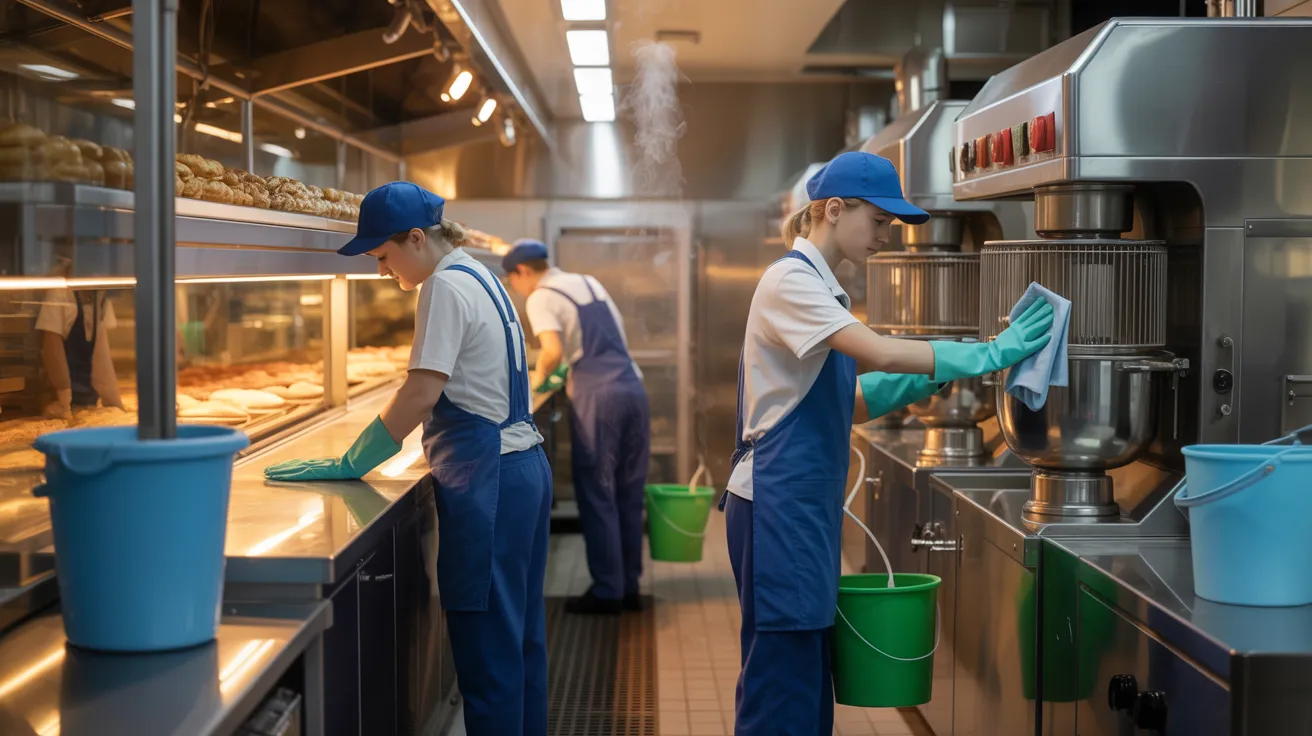
Brampton food safety and professional sanitation experts help you keep restaurants, food distribution centers, baking facilities, warehouses, and mobile food operations sanitized to standards. They sanitize high-touch points, food-contact surfaces, equipment, floors, drains, restrooms, and food prep areas using certified sanitizers, correct dilution, and verified exposure periods. in maintaining dining venues, food supply centers, bakeries, warehouses, and mobile food operations in compliance. They sanitize high-touch points, food preparation zones, equipment, floors, drains, restrooms, and food handling zones with approved chemicals, correct concentration, and recorded contact times.
Important Highlights
- Food safety cleaning technicians from Brampton work with restaurants, grocery departments, commissaries, warehouses, bakeries, schools, mobile vendors, and allergen-sensitive operations.
- Cross-contamination reduction is maintained by disinfecting frequently contacted areas, food-contact equipment, kitchens, floors, drains, restrooms, and storage areas with compartmentalized approaches.
- Recording of finalization through samples, reviews, and action records ensures certified contractors have confirmed proper chemical concentration, alignment, and exposure duration.
- Optimal hygiene plans take into account risk, output capacity, changeovers, spills, and regulations when assigning regular, recurring, and periodic activities by zone.
- Select vendors with hazard analysis knowledge, public-health, competency, WHMIS, training, liability, testimonials, color-categorized instruments, and compliance-ready cleaning documentation.
Which Brampton Facilities Need Food Safety Cleaning?
Any Brampton facility that processes, stores, prepares, packages, or distributes food needs food sanitation. You must follow it if your business falls under health department oversight, food regulations, or HACCP requirements. That requirement covers eateries, dining facilities, food distribution centers, supermarket departments, meat markets, fish counters, corner stores, and commercial kitchens.
Adherent hygiene cleaning is equally necessary in storage warehouses, production plants, freezer facilities, bakeries, school nutrition services, reception halls, and meal delivery centers. Temporary and mobile businesses apply similarly, examples including catering vehicles, festival sellers, and pop-up stands. Your location needs written cleaning standards if your team process ingredients, portion ready-to-eat items, reheat products, or store allergens. In Brampton, food safety continues to be not elective; it forms lawful, operational, and customer protection adherence.
What Services Do Brampton Cleaning Experts Provide?
Your operation needs cleaning professionals who sanitize all high-touch areas, kitchens, floors, and toilet facilities to maintain food safety compliance and public health standards. These zones receive attention because they represent the most significant contamination risk, trip and slip dangers, and breaches of sanitation codes.
By understanding their service scope, you can make sure your operation's sanitation protocols meet compliance standards.
Addressing High-Touch Surface Disinfection
determine how frequently each zone is sterilized
technical requirements and food safety regulations. to sustain effectiveness. Technicians may use surface testing to check disinfection results
Cooking Zones, Walking Surfaces, and Restroom Environments
Brampton cleaning services focus on kitchens, floors, and restrooms as each zone involves different food safety, accident, and wellness risks. In industrial kitchens, you need degreasing on cook lines, equipment exteriors, drains, prep surfaces, and splash zones to minimize contamination and pest pressure.
Professional floor care with documentation is also included. is likewise provided as part of the service.
For restroom sanitation, cleaners sanitize touchpoints, fixtures, partitions, dispensers, and waste containers, then restock supplies and control odours. They also service restaurant moprooms, where chemical storage, sink hygiene, and drainage conditions can affect sanitation description compliance and staff safety daily.
Why Food Safety Cleaning Matters in Brampton
Brampton businesses need to implement food-safe cleaning standards for meeting legal standards and obtaining approval. You also reduce cross-contamination by cleaning and sanitizing food-contact surfaces, equipment, and high-touch areas correctly. Most importantly, you safeguard community wellness by reducing the chance of food poisoning in your establishment.
Health Code Compliance
Brampton food companies must comply with strict public health standards, so hygiene maintenance is essential to satisfying health codes, protecting customers, and sidestepping penalties. You must maintain hygienic food handling zones, written maintenance records, correct sanitizer application, and verifiable staff procedures that meet municipal and provincial inspection expectations.
When cleaning standards slip, notices, remedial directives, public perception damage, and service suspension from additional reviews or enforcement actions become concerns.
Cross-Contamination Management
Following health code standards depends on your ability to prevent cross-contamination in daily food handling and cleaning. You should isolate raw items from prepared foods, sanitize prep surfaces between tasks, and maintain separation of cleaning products from food. Clear procedures reduce transfer risks and support consistent compliance during inspections.
You could implement allergen segregation to stop main allergens from reaching shared surfaces, containers, or equipment. Apply separate boards, color-marked equipment, and rigorous tool identification so staff don't mix items during preparation or service. Enforce washing hands following uncooked meat, fish, egg products, or allergens. Swap cleaning rags frequently, and test disinfectant concentration using strips. When employees learn these procedures each shift, you develop a more sanitary, secure business that matches Brampton's safety requirements daily.
Public Health Protection
If proper sanitation deteriorates, you don't merely risk a failed inspection—you boost the probability of pathogenic contamination harming customers, staff, and the broader Brampton area. You also undermine your responsibility in protecting public health, especially in busy food facilities where pathogens travel quickly through surfaces, equipment, and touchpoints.
You must establish cleaning procedures that remove contaminants, sanitize properly, and confirm effectiveness. This involves adhering to contact periods, employing authorized sanitizers, logging schedules, and training employees to meet regulatory standards. These mechanisms support disease prevention by decreasing microbes before contaminating food or surfaces. Across Brampton, strong cleaning protects at-risk populations, limits outbreak risk, and demonstrates accountability. When you maintain proper protocols, you go beyond requirements—you meaningfully reduce risk and enable safer food service city-wide.
Why Is Cleaning Essential for Food Safety Compliance?
Adopting strict sanitation practices underpins food safety compliance by lowering contamination exposure, preventing pathogen multiplication, and keeping your facility aligned with sanitation requirements under HACCP-based programs and public health regulations. You confirm that contact surfaces appear visibly clean and microbiologically controlled, facilitating documented preventive controls and inspection readiness.
Conscientious cleaning additionally solidifies allergen management by extracting residues that can trigger undeclared allergen exposure. When you pair verified sanitation methods with safety training, your staff can adhere to uniform procedures, handle approved chemicals accurately, maintain records thoroughly, and manage discrepancies prior to problems worsen. Systematic cleaning promotes traceability, establishes remediation efforts, and proves accountability during audits. Furthermore, it aids you maintain quality assurance, preserve compliance standards, and decrease the possibility of regulatory actions, mass recalls, formal complaints, and avoidable safety threats.
When Should You Arrange Commercial Cleaning?
Schedules for cleaning perform best when developed based on risk factors, production capacity, and regulatory needs instead of just a predetermined calendar.
facility shutdowns, seasonal-related soil buildup, or pest-control pressure timeframes.
How Do You Choose Brampton Cleaning Experts?
Start by screening providers against food-safe sanitation requirements, not price alone. You should verify that each company understands CFIA, public health, and HACCP-aligned expectations relevant to your facility. Ask for proof of insurance, WHMIS compliance, documented staff training, and supervision practices. Review whether technicians understand cross-contamination risks, chemical handling, and traceable sanitation records.
You should further examine operational reliability and answerability. Request references from food facilities in Brampton, then review reply speed, corrective-action procedures, and communication standards. Validate the company supports supplier audits and can supply compliance documentation to regulators or external parties. Confirm equipment is maintained, color-coded implements are used appropriately, and site-specific hazards are recognized. A experienced service ensures regulatory compliance, product integrity, and your brand reputation.
What's included in a Food Safety Cleaning Plan?
Write out a plan that outlines every sanitation task, standard, and responsibility before starting production. You should include cleaning schedules, approved products, ratios, contact periods, tools, and validation approaches for each area, surface, and device. Ensure you include pre-operational inspections, corrective actions, and employee training requirements.
Your strategy should also focus on cross-contamination controls, waste handling, pest-prevention measures, and documented schedules for rest areas, drains, flooring, and food-contact surfaces. Detail how you'll keep raw and ready-to-eat processes separate, facilitate ingredient tracking, and ensure accurate allergen labeling through validated cleaning between product changes. You should assign accountability, keep signed records, and assess results against regulatory standards, HACCP controls, and customer requirements. When gaps appear, modify procedures immediately and instruct staff.
Commonly Asked Questions
Do sanitation providers work during overnight shifts at Brampton facilities?
Yes, you can arrange sanitation coverage to support nighttime operations in Brampton facilities. You'll coordinate nighttime cleaning around operational windows, security measures, and staffing requirements. Services generally map overnight logistics to reduce disruption, ensure compliance, and record finished work. You should confirm arrival timeframes, supervision, access protocols, and waste handling before beginning service. If you operate regulated spaces, you'll also need documentation that enable audits and compliance verification.
Do sanitation professionals offer emergency spill response solutions?
Yes, you can locate Brampton cleaning professionals providing hazard containment services. They handle hazardous incidents, evaluate risks, contain affected zones, and initiate rapid cleanup to reduce risk and avoid operational impact. You should confirm timeframes, credentials, PPE measures, and disposal methods. If your facility must adhere to regulations, pick a provider that tracks incidents, adheres to standards, and ensures audit compliance.
Will environmentally safe disinfectants disinfect safely food-contact surfaces?
In essence, eco-friendly disinfectants prove safe for food-handling equipment provided you choose solutions certified for food use that satisfy compliance requirements. Validate contact times, dilution ratios, and rinse requirements prior to application. Plant-derived products minimize chemical burden, although you need proof of efficacy against harmful bacteria. For maintaining surfaces without residue, adhere to exact manufacturer guidelines and ensure the disinfecting agent satisfies food sanitation requirements.
Do cleaning plans allow for seasonal variations?
Yes, you can modify cleaning plans for production fluctuations. You should adapt timing, staffing, chemicals, and validation steps to fit seasonal workflows while sustaining regulatory requirements. You'll reduce equipment downtime by timing sanitization around equipment transitions, maximum output, and usage cycles. You should further modify SSOPs, instruction programs, and environmental testing to capture periodic risks, additional allergens, or increased soil loads. Ongoing evaluations preserve your strategy efficient.
Do commercial cleaners educate employees on sanitation best practices?
Certainly, commercial cleaners coach your employees on sanitation best practices. You obtain employee development on correct chemical practices, processing times, contamination control, equipment disassembly, and documentation procedures. They generally coordinate instruction with HACCP, GMP, and CFIA or regional health bodies standards. Many also run sanitation audits to check standards, identify gaps, and strengthen corrective measures. This enables you to maintain consistent procedures, satisfy audits, and reduce food safety risks daily.
Final Thoughts
By partnering with Brampton commercial cleaning and food safety experts, you aren't simply tidying—you maintain your facility inspection-ready and your standards up to code. From kitchens to processing floors, every clean surface and maintained corner reduces pest risk and prevents costly issues. By scheduling cleanings at appropriate intervals and following a documented cleaning plan, you secure your team, customers, and your standing. In a heavily controlled environment, hygienic conditions are mandatory—they're essential to successful operations.